

Work Support
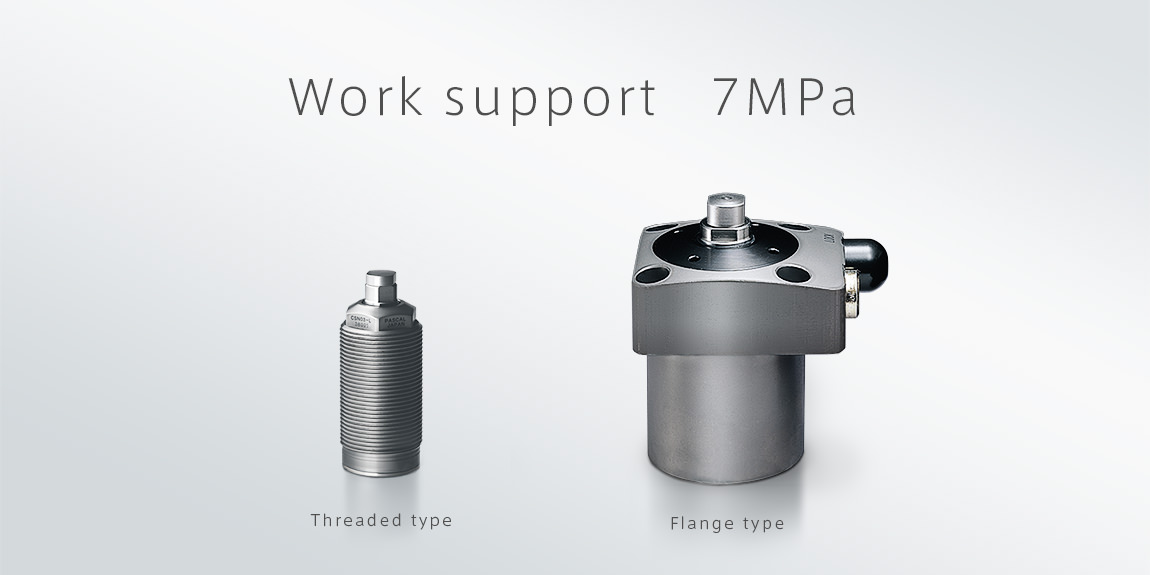 We have a wide variety to suit most of your clamping needs

THREADED BODY WORK SUPPORT

POSITIVE LOCK WORK SUPPORT

Need of a Positive lock work support
While being machined, work piece is often retained in a holding fixture; supporting the work piece on two or more support pads on the fixture. In such an arrangement relatively large portions of the work piece is unsupported and subject to deflection due to the cutting forces. When the unsupported portions are of irregular contour; a fixed height support cannot be used. Moreover each successive work piece may require varying height of supporting.
Difficulties faced while using conventional work supports
The main reason for unsatisfactory performance of the work support is due to the following reasons.
- Excessive contact force on the work piece. The work support must not exert excessive amount of contact force on the work piece. This could try lifting the work piece or distort the work piece.
- Another reason for unsatisfactory performance of the work support is due to the vibration created by the cutting action of the tool. Vibration could momentarily lift the work piece from the work support. For example, a continuously loaded wedge will cause the support member actuated by the wedge to follow the displaced surface of the work piece and will not allow it to return. This can continue adding up till the work piece resists further displacement. This becomes predominant when the natural frequency of the clamped work piece matches the frequency generated by the cutting tool.
- Unable to withstand the cutting force, the plunger moves down.
Various devices have been developed in the past to solve these problems and none have been completely satisfactory. We in Philip Hydraulics have studied this extensively and brought out a solution.
Hydraulic or Pneumatic pressure is supplied on Port A and the work support plunger floats against a light spring load. The job is loaded over the work support and the plunger moves down accommodating the job profile. The job is then clamped and the pressure is released from port A. Now the wedge moves against a light spring load and mate with the plunger that is in contact with the work piece and positively lock it against sliding down under heavy cutting load. Now Hydraulic pressure is applied on port B that the plunger is locked against moving upward during vibration. On completion of the work the port B can be vented. This sequence can be continued for the next cycle.
The minimum hydraulic pressure required at port B is 50 bar.
